Often found foraging in and around your garden, the common house sparrow can cause problems if they find shelter within your eaves, gutterin...
Pest Control UK
- Ants
- Bats
- Bed Bugs
- Bees
- Beetles
- Booklice
- Cockroaches
- Deer
- Fleas
- Flies
- Foxes
- Grey Squirrels
- Gulls
- Hornets
- House Sparrows
- Mice
- Mink
- Moles
- Moths
- Parakeets
- Pigeons
- Rabbits
- Rats
- Silverfish
- Spiders
- Wasps
- Weevils
- Training Courses
- Supplies
- Resources
- Contact Us
Case Studies
House Sparrows
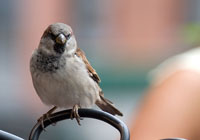 Latin Name: Passer domesticus
Months of Activity: January - December
Probably the most often seen of British birds, house sparrows live in close proximity to man and build their nests not only in holes, in thatch and in hedges, but also in sheds, warehouses and in fact anywhere with an easy food source.
House sparrows are extremely versatile and will feed on grain, seeds, flowers and fruit. Because of this feeding practice, the birds can cause damage to allotments, farms and market gardens. They are also considered a serious pest in cereal growing areas.
Appearance
- The cock house sparrow has a rusty back, black bib and grey crown and cheek patches.
- The hen bird is more of a dull brown all over, smaller than the male , and is very similar to the juvenile house sparrow.
Lifecycle
The house sparrow follows a very distinct breeding pattern, which starts in early April with the male building his nest out of twigs, moss and other garden materials. Once the nest is built, he can then go and find a breeding partner.
Four to six eggs are laid and will hatch after 11 to 14 days of incubation, which is taken on solely by the hen. The chicks will fledge after 15 days and will remain in their parents care for a further month or so. House sparrows will typically have 2 or 3 broods per year and can continue to breed as late as September.
Pest Control
The most effective method of control is to exclude sparrows from the area by using nets and making sure that there are no gaps or crevices for the birds to pass through. This method is most effective in large, enclosed spaces such as warehouses, but does require the skills and experience of your local pest control company.
For smaller problems, such as sparrows nesting within your roof, the problem must be tackled by scaring the birds out and then finding and blocking up any holes that could be deemed large enough for them to re-enter your loft space.
NOTE: The Dunnock, a close relative of the house sparrow and a protected species, is often mistaken as the common sparrow, so it is important to source expert advice if you think that you have a house sparrow pest problem.